
Level 2 EV Charger Installation

EV Charger Installation in DFW

A Level 2 EV charger needs a dedicated 240V circuit, sized at 125% of the charger's continuous draw, and in most DFW municipalities it needs a permit and an inspection. We install them across Fort Worth, Southlake, Keller, Frisco and the wider metroplex, and we do the load calculation before we quote rather than after we start.

TECL #41809Licensed and insuredRated 5.0 from 190+ reviews

Serving Fort Worth, Southlake, Keller, Frisco, Colleyville, and greater DFW

HomeSafe TECL-licensed electrician working on a residential electrical panel in Fort Worth, TX

Quick Answers

Circuit
Dedicated 240V, sized at 125% of continuous draw
Typical job
One day, when the panel has capacity
Permit
Required in most DFW cities. We pull it and handle the inspection
Brands
Any major charger, including one you bought yourself
If the panel cannot take it
We tell you before the work starts and quote both parts together
Load calculation

What decides the job is your panel, not the charger

Most EV charger installs are straightforward. What decides whether yours is a one-day job or a two-part project is whether your existing panel can carry the load, which is a question of what is already on it rather than the number printed on the front.

Minimum sizing

A 40-amp charger needs a 50-amp breaker and 8 AWG copper at minimum. A 48-amp charger needs 60 amps.

A load calculation to NEC 220.83 tells us whether that fits alongside your HVAC, water heater and everything else already drawing power. If it does not, the panel comes first, and we quote both together so there is no surprise halfway through.
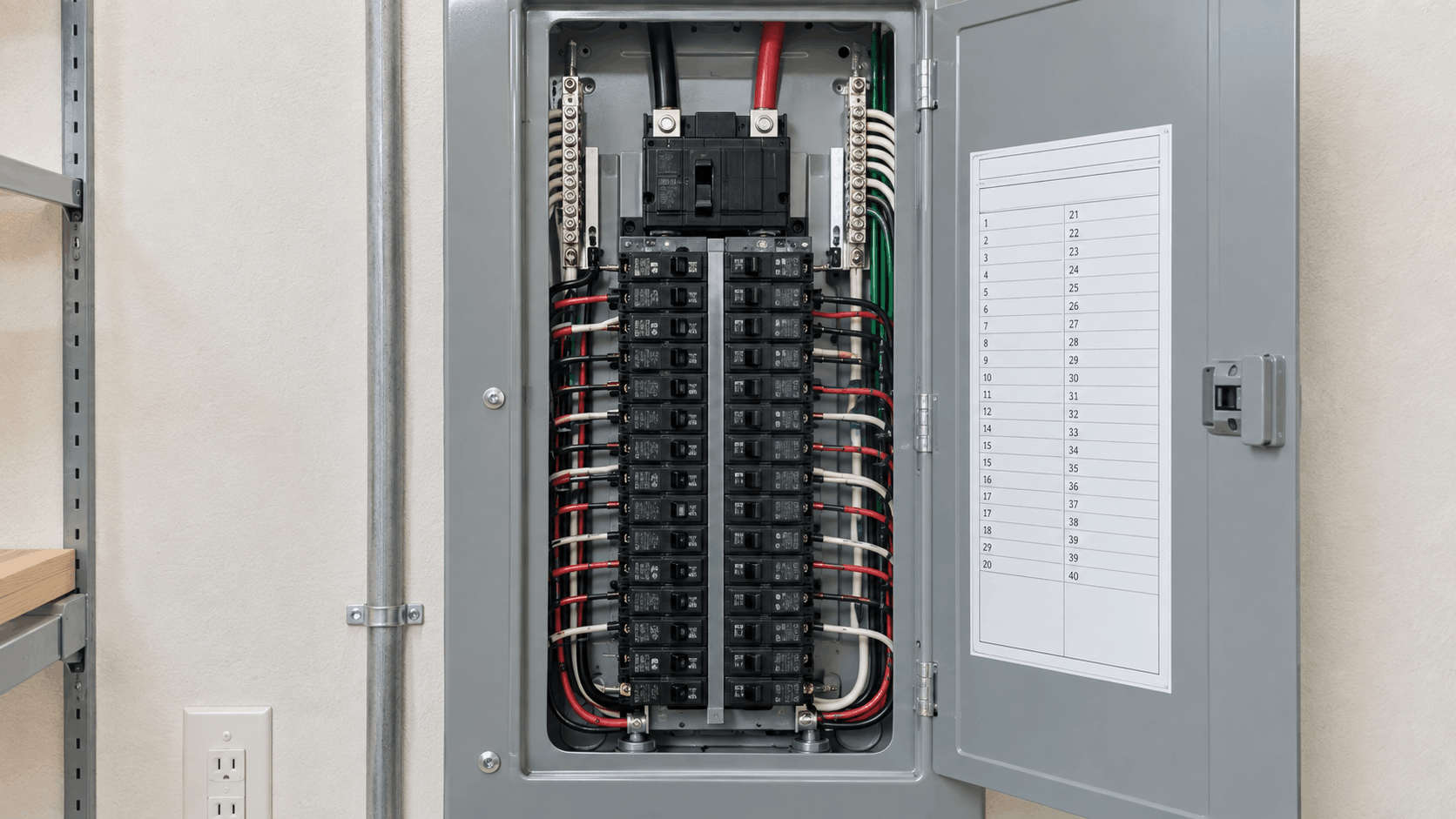
An open residential electrical panel with the dead front removed, showing breakers and dressed wiring
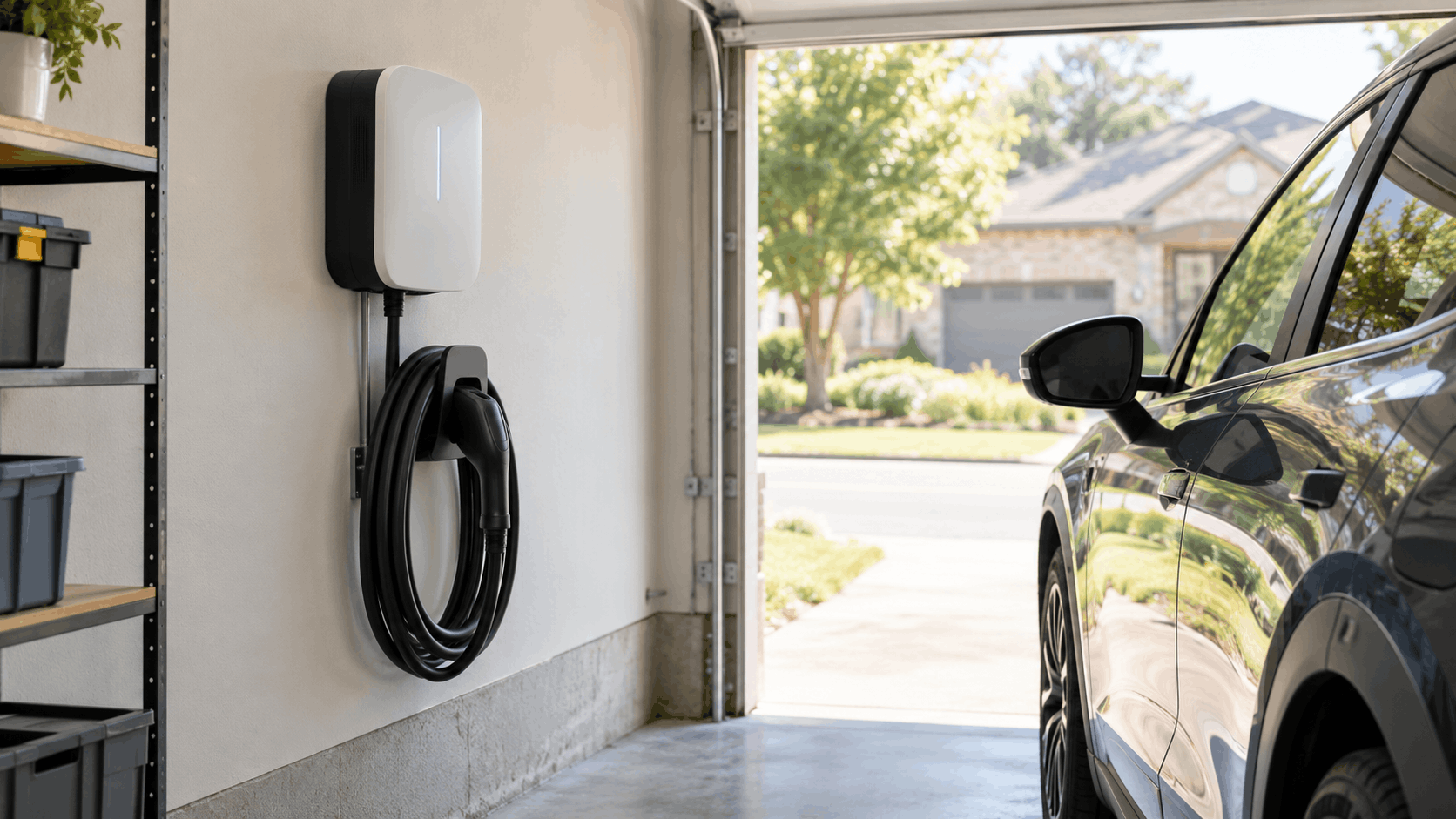
A Level 2 EV charger mounted on a garage wall with the cable coiled on its holster and a car parked on the drive
Equipment

What we install

Any major charger. As a Generac PowerPro Premier dealer we supply and fit Generac units. We also install Tesla Wall Connectors and universal Level 2 stations for Rivian, Ford, GM and every other major standard, including chargers customers have bought themselves.

Level 1

Needs no dedicated circuit and adds roughly 3 to 5 miles of range an hour.

Level 2

What most people actually want, at roughly 20 to 30 miles an hour depending on the vehicle.

Permits and code

Permits, and why the city matters

Permit turnaround varies more than the work does, and it varies by jurisdiction rather than by the job. We schedule against your city rather than an average, and we pull the permit and see the inspection through.

At resale

Skipping the permit is a real problem at resale, when an unpermitted circuit shows up in a buyer's inspection.

Code requirement

GFCI protection is required on the circuit under NEC 625.54, which in practice means a two-pole GFCI breaker at the panel.

Cost factors

What moves the price

We quote after a load calculation rather than before, so this page carries no figure. What we can tell you is what the number is made of, because it is the same three things every time:

A short run to a garage wall on a panel with capacity is the cheap version. A long run to a detached garage on a full 100-amp panel is two jobs, and we would rather tell you that at the assessment than halfway through.

01

The run length from the panel to the charger.

02

The rating of the charger you are fitting.

03

Whether the panel needs work before it can carry either.

Our EV charger guide breaks down every factor in detail.

Read the guide →
FAQ

Frequently Asked Questions

It depends on the run length from the panel, the charger's rating and whether your panel needs work first. We quote after a load calculation, not before, and the quote covers everything including the permit.

Yes. We install customer-supplied units on a circuit sized for that charger's actual rating.

Not automatically. It depends on your existing load. Plenty of 100-amp panels take a Level 2 charger; plenty do not. The calculation decides.

Not currently. The federal 30C residential credit expired 30 June 2026, and Texas has no state equivalent as of this writing. Confirm with a tax professional before assuming anything.

A straightforward install is about a day. If a panel upgrade is needed first, that is a separate scope and we identify it at the assessment.

Book an assessment

Book an EV Charger Assessment

We do the load calculation before we quote rather than after we start.

TECL #41809  ·  Serving Fort Worth, Southlake, Keller, Frisco and greater DFW