Texxas Power · Commercial Standby Power
On a working farm or ranch, a power outage doesn't just turn off the lights. It stops the well pump, the barn ventilation and the refrigeration, usually at the worst possible time. Texxas Power installs standby power for farms, ranches and horse properties across Aledo, Argyle, Celina and the rest of North Texas, sized around what your property actually runs.
The difference
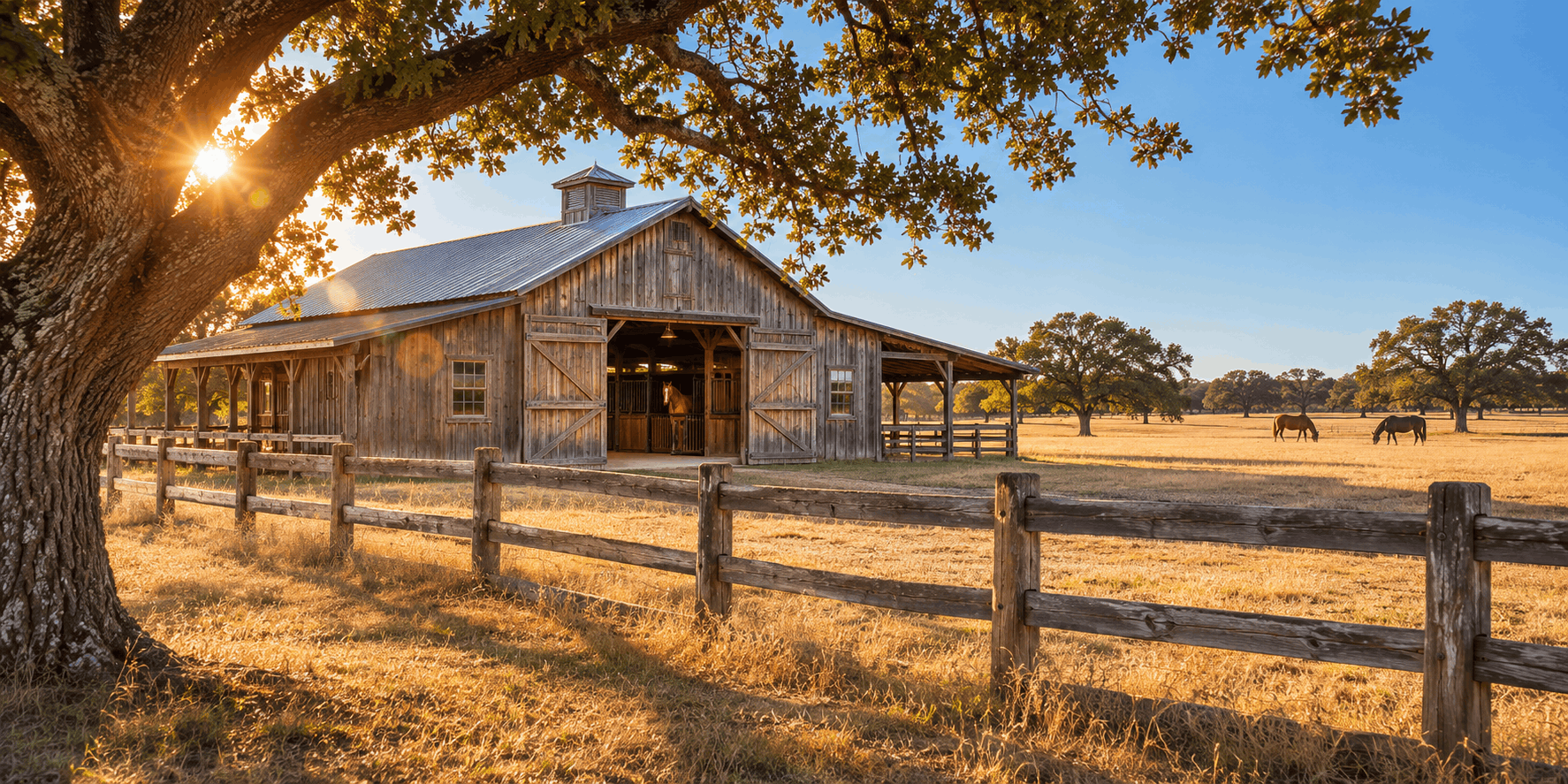
In a house in a subdivision, a power outage is an inconvenience. On a farm or ranch, it can mean no water from the well, no ventilation in the barn, spoiled refrigerated feed or medication, and a utility crew that may take longer to reach a rural line than a dense neighborhood one. The standby power conversation here starts with what the property actually depends on electrically: the well, the barn, the cold storage, the irrigation pump, not a generic square footage number.
A lot of rural properties don't have a natural gas line, so propane is often the better fit here, not a fallback. We check what your property actually has access to, including whether a buried propane supply makes sense, during the site visit. Assuming natural gas just because that's the default in town is how a quote ends up wrong before anyone's dug a trench.
Know where you stand
Dairy operations carry a real, enforced temperature standard. Barn ventilation and livestock cooling don't carry the same kind of mandate. Here's where each one actually stands.
Dairy operations
Texas adopts the federal Grade "A" Pasteurized Milk Ordinance by reference. Grade A milk has to stay at or below 45 degrees through receiving, processing and delivery. No statute names a generator as how you meet that. An extended outage is still a direct threat to a limit that's actually regulated, not just a preference.
Livestock and poultry
There's no state requirement for backup power on barn ventilation or cooling. That doesn't make the risk smaller: a ventilation failure during a Texas summer is still a livestock-welfare and financial problem, with or without a regulation behind it.
The site assessment
A specific look at what your property actually runs on, not a generic acreage-based quote.
We look at what's actually drawing power on your property, including well pumps and other motors that need extra starting capacity, so the generator we recommend can actually start them, not just run them.
We check whether natural gas is available or whether propane is the right call for your property, and what supply and meter capacity that requires.
We plan the generator and pad location around your well, septic, irrigation lines and existing structures, rather than assuming an open lot, whether that's a horse property outside Justin or a working ranch near Prosper.
We scope the permitting path for your specific county or municipality before anything is quoted, since rural and unincorporated areas can differ from in-town requirements.
How it runs
A free, no-obligation visit to look at your panel, your fuel supply, and the realistic pad locations on your property, so we size the system honestly instead of guessing.
Our team reviews what the site visit found before anything is filed, so the permit application matches what's actually on your property.
We pull the permit and schedule the inspection. Timing varies by county or municipality, your utility's schedule, weather, and equipment delivery, not a fixed number of days.
Pad, fuel line, electrical and transfer switch go in. A dig test runs before any trenching starts, so what's already buried near your well, septic or irrigation lines is known before anything is cut, and anything outside the original quote gets your written approval before work starts on it.
The generator is registered under the manufacturer's warranty and started up.
We show you how to run the system and what to watch for, then cut power on purpose and confirm it carries your load while you're standing there.
Why work with us
The credentials and crew behind every installation we do, on a working farm or anywhere else in North Texas.
Texas Electrical Contractor License #41809. Every installation is pulled and inspected under that license.
A Generac PowerPro Premier dealer, and a dealer and installer for Kohler and Champion. Three brands to choose from, matched to what actually fits your property.
6 technicians and 5 service trucks, serving properties across North Texas, including rural and unincorporated areas.
70 collective years of experience in the industry; Nick Bieghler personally has 25+ years.
Rated by the customers we've actually installed for.
We take projects across North Texas, including rural and unincorporated areas. The right call for your specific property is something we confirm during the site visit.
No. Propane is a common and often better fit for rural properties without a natural gas line. We assess your actual fuel supply options during the site visit rather than assuming natural gas is available.
Sizing has to account for the motor's starting current, which is higher than its running current, not just the running load. That's part of what we size for, rather than sizing to the pump's running wattage alone.
We run a dig test before any trenching starts specifically so what's buried near your well, septic or irrigation lines is known before anything is cut, and we site the pad around your property's actual layout.
It depends entirely on what you're running: a well pump alone is a different job than a well pump plus barn ventilation plus refrigerated storage. We size it after seeing the property, not before.
Once equipment arrives on site, installation typically runs three to five weeks. Permitting is usually the step most likely to take longer than expected, and rural permitting can vary from in-town timelines.
Free site assessment
Tell us what your property actually runs on. We'll walk you through what an install looks like on your land.
Texxas Power Home Services LLC · Texas Electrical Contractor License #41809
Tell us about the property. We'll come back with next steps.